

 Ember Fasting
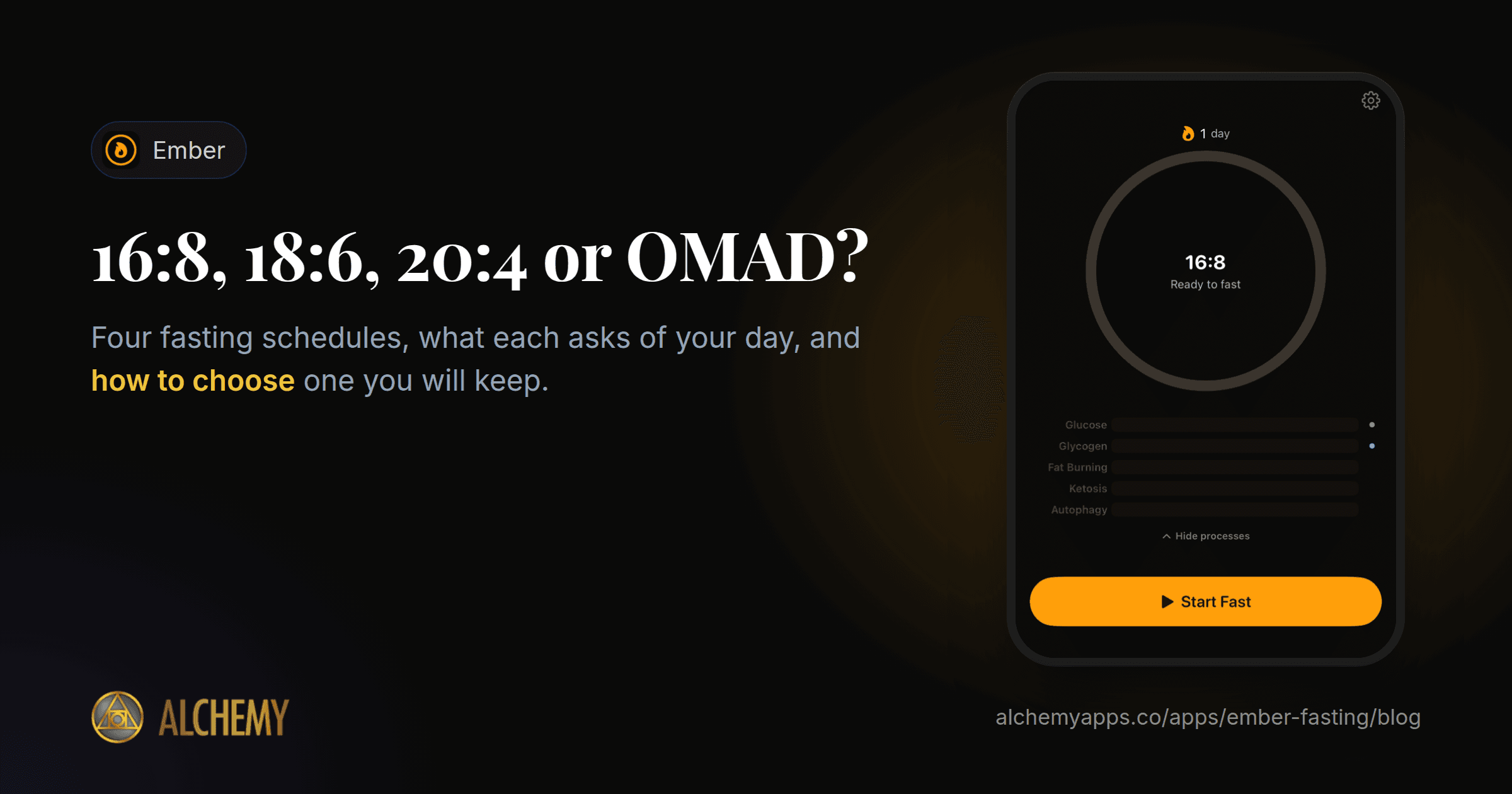
Intermittent fasting schedules are named by two numbers: hours fasting, then hours eating. 16:8 means sixteen hours without food and an eight-hour window to eat. OMAD means one meal a day.
None of them is the right one. The right one is the one that fits your days well enough that you keep doing it. Here is what each asks of you.
This is general information, not medical advice. If you are pregnant or breastfeeding, have diabetes, take medication that must be taken with food, or have a history of disordered eating, talk to your doctor before you fast.
16:8
What it looks like: finish dinner by 8 p.m., eat again at noon the next day. Most of the fast happens while you sleep.
Why people start here: it often means skipping breakfast and not much else. Lunch and dinner stay social.
Watch for: an eight-hour window can still hold three meals and snacks. If your goal is eating less, what you eat in the window still matters.
18:6
What it looks like: a 2 p.m. to 8 p.m. window, or noon to 6 p.m.
Why people move here: after a few weeks of 16:8 feels easy, two more hours is a small step.
Watch for: a six-hour window usually means two meals. Make them proper meals, with protein, not a snack and a dinner.
20:4
What it looks like: a four-hour window, such as 4 p.m. to 8 p.m. One main meal and a smaller one.
Why people choose it: fewer decisions about food in the day. Some people find it simpler than 16:8 once they adjust.
Watch for: it is harder to eat enough in four hours, especially enough protein. If you are training hard, this window can work against you.
OMAD (one meal a day)
What it looks like: a single meal, usually dinner, roughly 23 hours apart.
Why people choose it: maximum simplicity: one meal to plan.
Watch for: this is the hardest to sustain and the easiest to undereat on. It is not a starting point. Many people use it now and then rather than every day.
How to choose
- Start with the schedule your life already almost follows. If you rarely eat breakfast, 16:8 may only mean stopping the evening snack.
- Hold it for two to three weeks before changing anything. The first week is the hardest on any schedule.
- Move one step at a time. 16:8 to 18:6 is a small change. 16:8 to OMAD is not.
- Let the weekend be different if you need to. A schedule you keep five days a week beats a perfect one you quit. We wrote about this in all-or-nothing fasting.
- Stop if it makes you feel unwell. Dizziness, fainting or obsessive thoughts about food are signals to stop and talk to a doctor, not to push through.
Using Ember for any of these
Ember has all of them built in: 16:8, 18:6, 20:4, OMAD, or a custom schedule. The full timer is free, with no trial and no account. Widgets for the home screen, Lock Screen and StandBy show where you are in your fast without opening the app. Switching schedules is one tap, so you can move up a step when you are ready, or back down on a hard week.
Curious what is happening in your body as the hours go by? Read what happens at hour 12.