


Screenshots
What Makes It Different
Shop and Maintenance
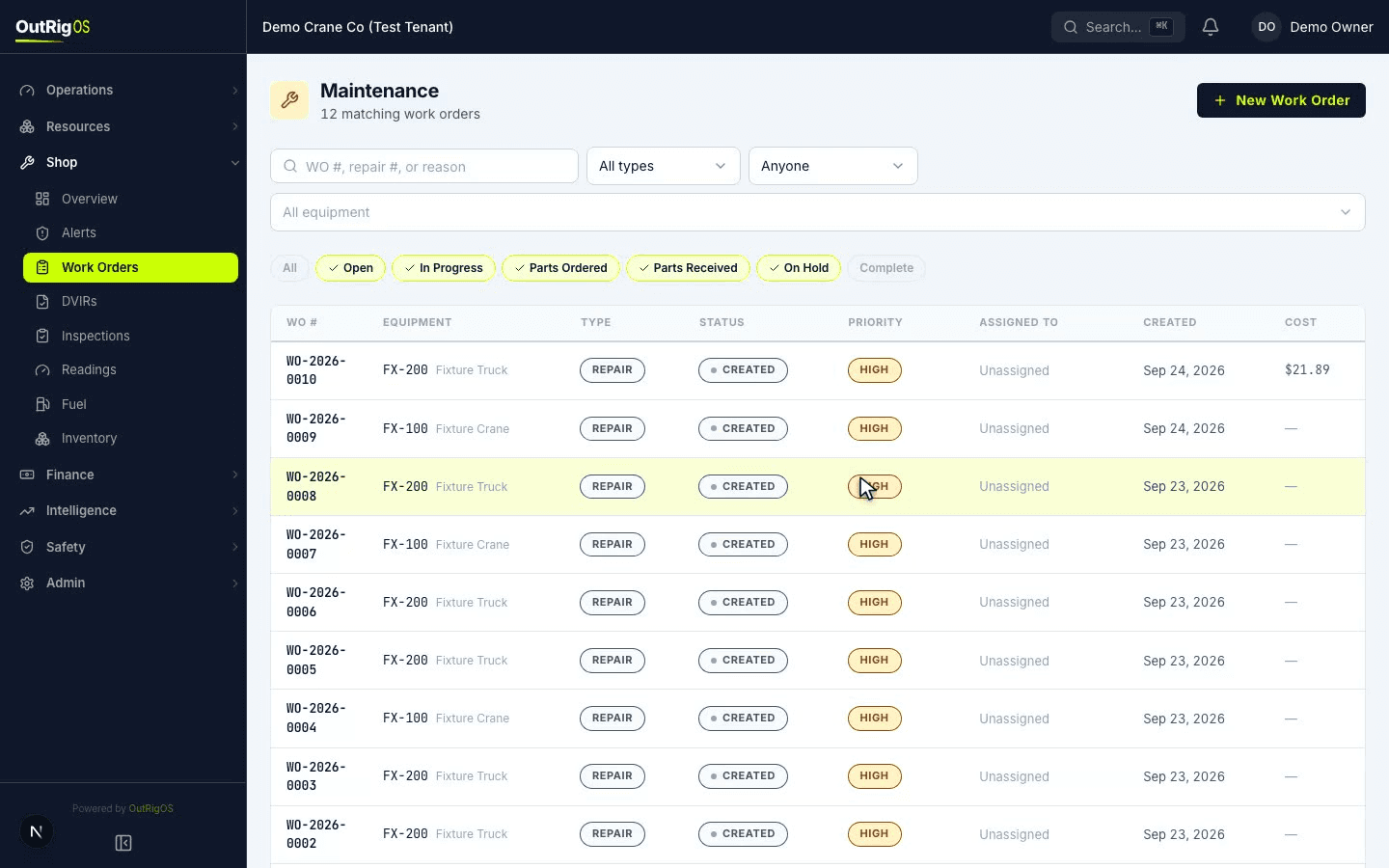
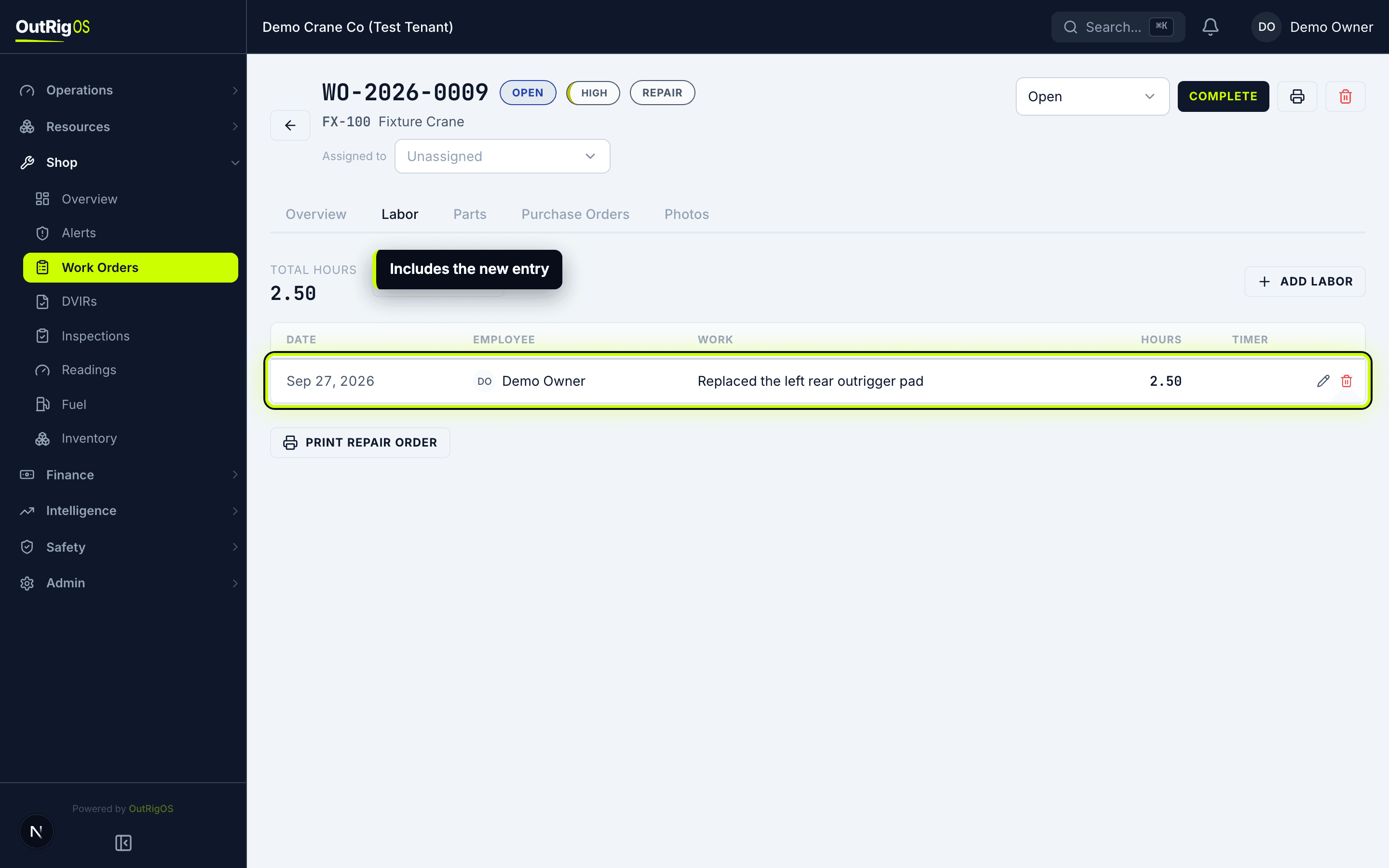
Work orders track labor, parts, photos, and documents against each unit, along with preventive maintenance coming due, meter readings, DVIRs, inspections, and purchase orders.
Storage and Yard
The yard tracks every stored unit by ticket and jobsite, with a printed label and QR code on each one.
Crew Certifications
Every operator and rigger credential is on file with its expiration date, so the office sees what will lapse before dispatch sends a crew out.
Access by Desk
Each desk in a crane office gets its own permissions, from dispatch and estimating to the shop, the yard, safety, and accounting. A person can hold any combination, and seeing dollar figures is a separate permission the owner can give to anyone.
Built for Many Companies
Every record carries the company it belongs to, and the database itself keeps one company's data out of another's view.
Oiler, In Development
Oiler is an office assistant for the paperwork around every lift. It will size lifts against verified manufacturer load charts with the page cited, and nothing it drafts goes out until a person approves it.
About OutRigOS
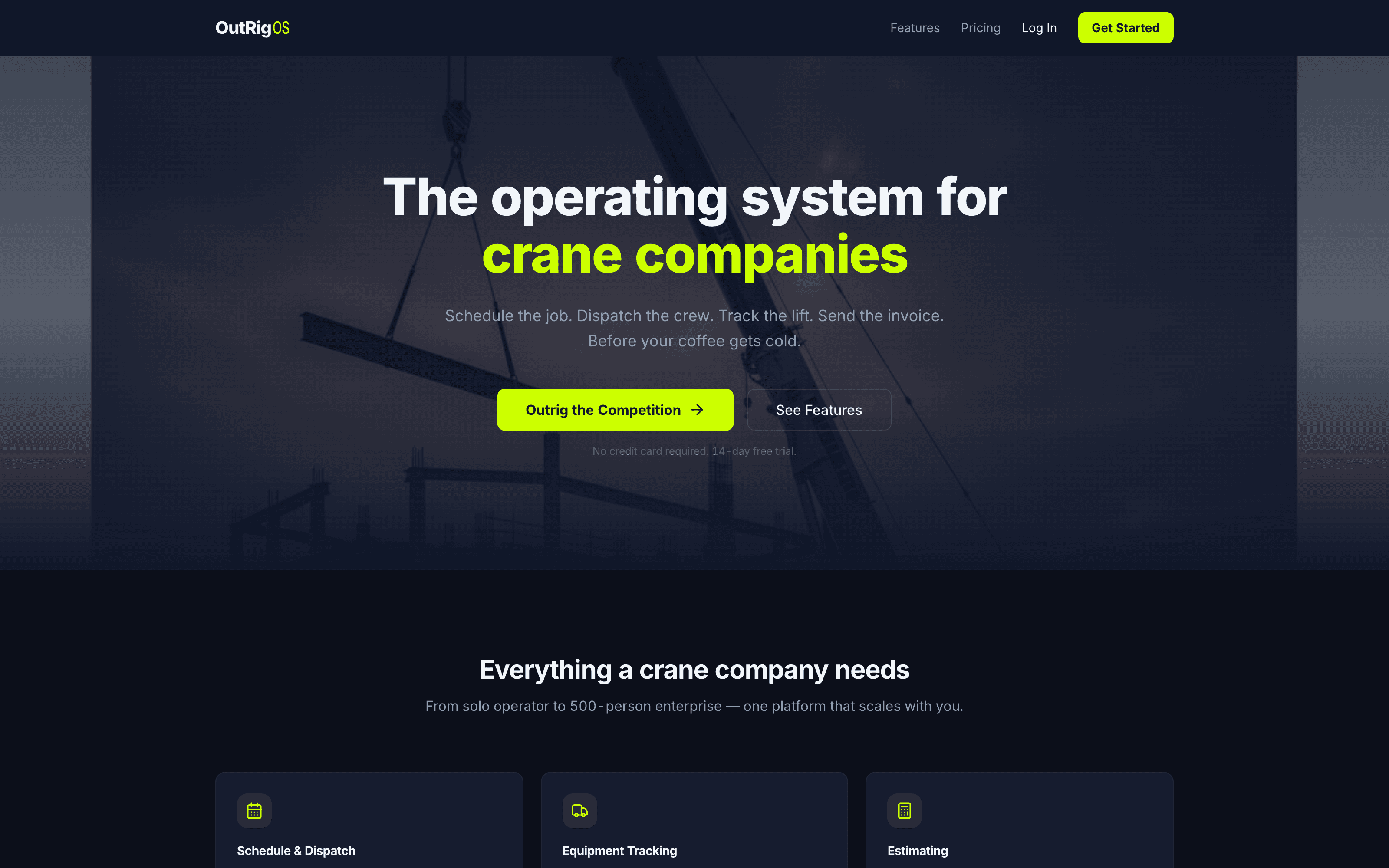
OutRigOS keeps a crane company's equipment and people in one system. Shop work orders, preventive maintenance, inspections, yard storage, and crew certifications all live there, and each desk in the office sees the part of the business it works on.
It grew out of QP Biz, the system Chris Schrade started building in 2016 for A Quick Pick Crane Service, the family crane and rigging company in Connecticut that Chris grew up in. QP Biz still runs that office today. OutRigOS rebuilds it for the whole industry on a modern stack, with every company's records kept apart in the database from the first line of code.
A Quick Pick is the first customer. Its shop and yard staff use OutRigOS today in a closed alpha, and what they ask for is what gets built next.
Next comes Oiler by OutRigOS, now in development. On a crane crew, the oiler is the operator's assistant who handles the routine work so the operator can focus on the lift. Oiler does the same for the office. The first pieces are built and in testing: Oiler reads incoming requests, and it holds every outbound action until a person approves it. The next phase adds drafts of the quotes, pick plans, permits, and invoices around every lift. When a job needs a crane, Oiler will size the lift against verified manufacturer load charts and cite the chart page behind every answer. Chris designed it to work inside OutRigOS and, later, to run on its own beside the software larger crane companies already use.