

DaylightGov
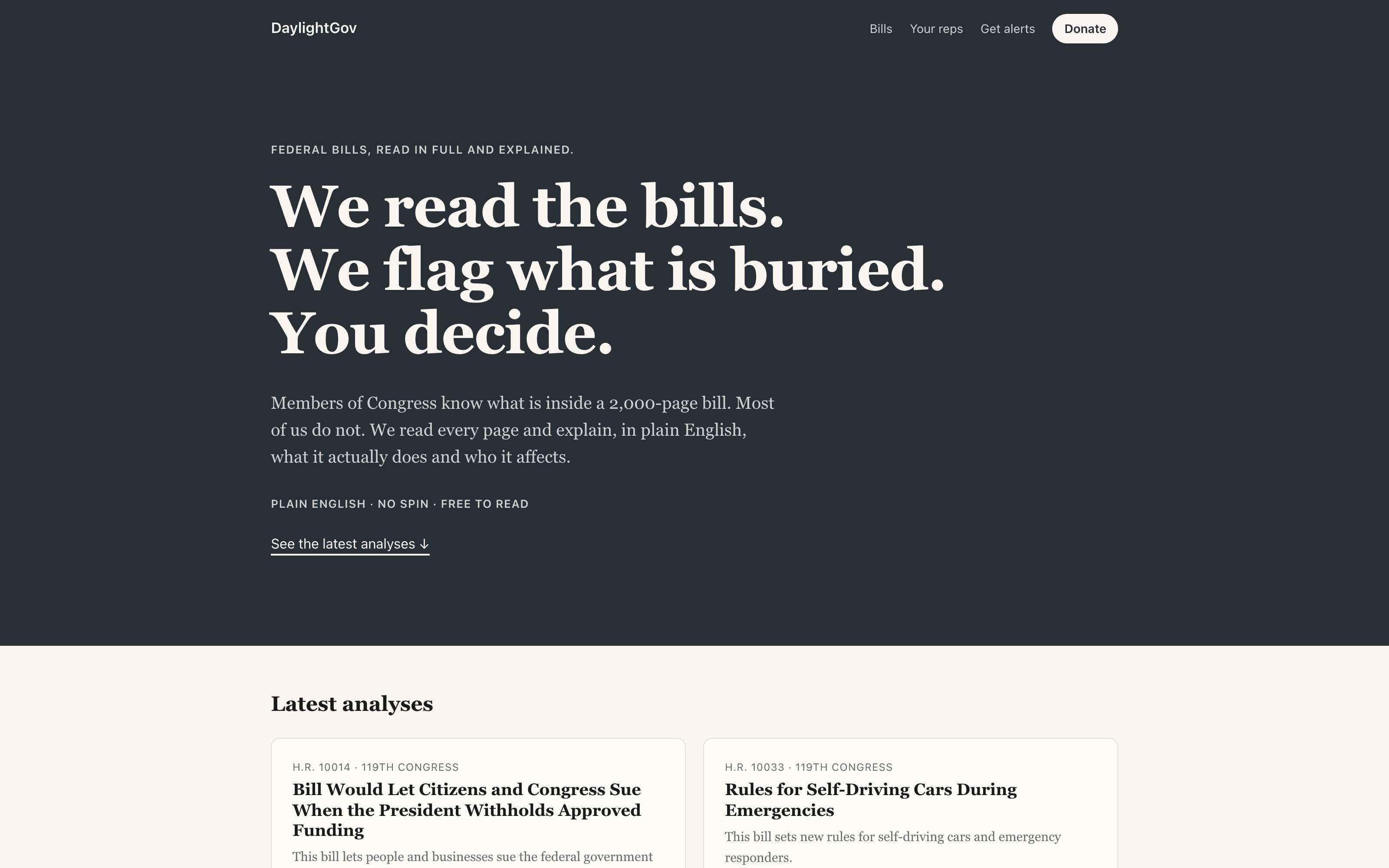
We read the bills. We flag what is buried. You decide.
Screenshots
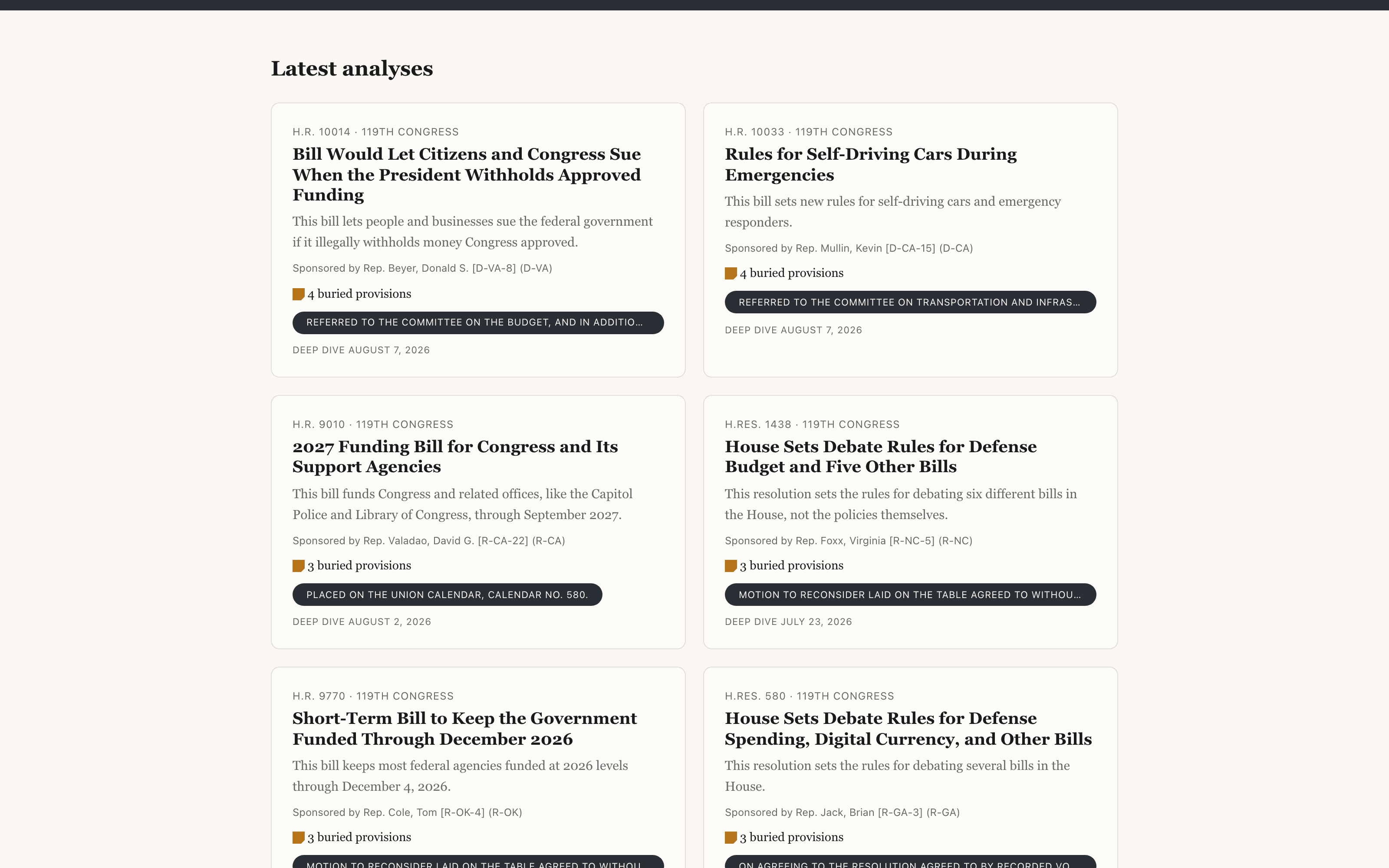
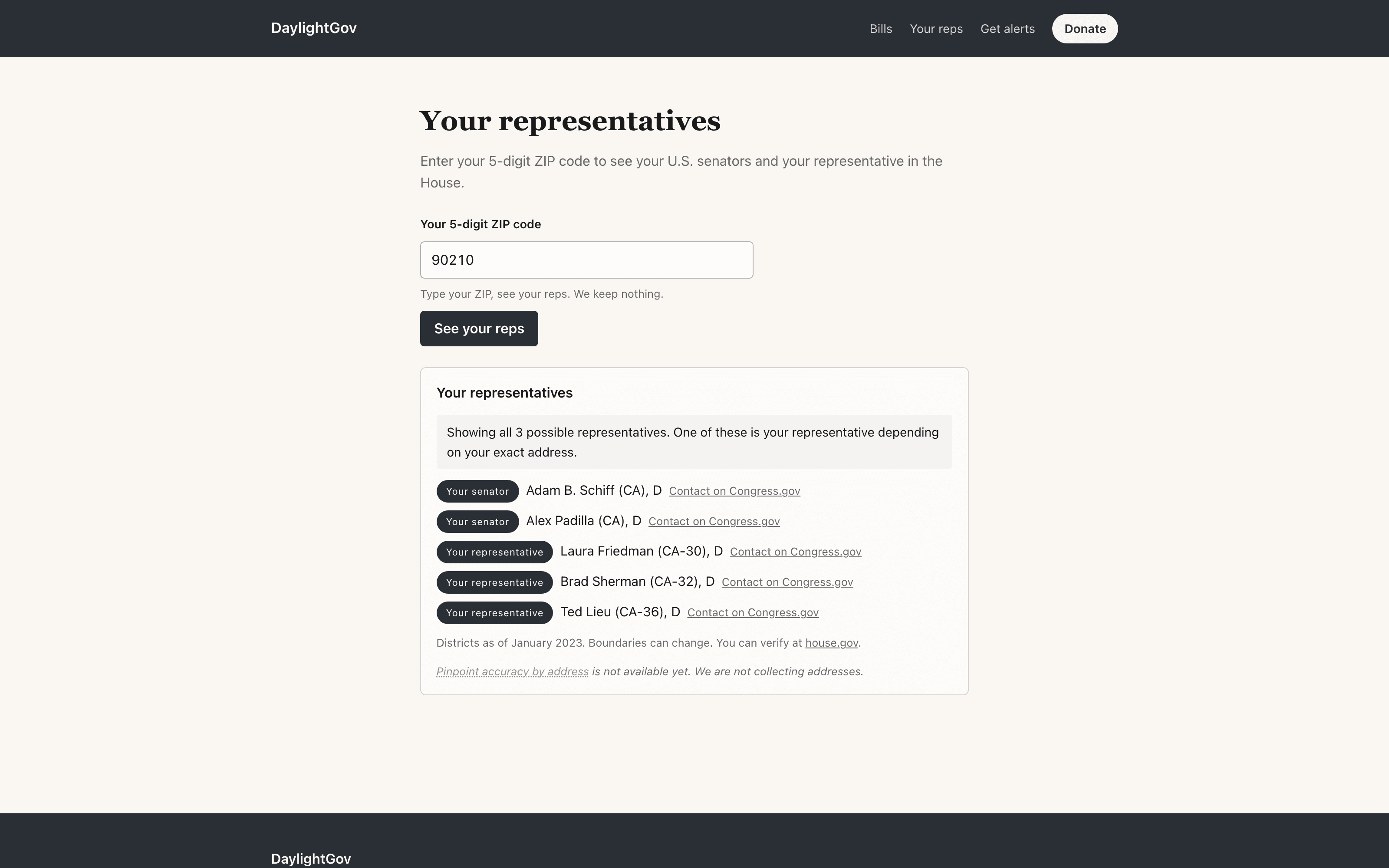
What Makes It Different
Every Page, Read End to End
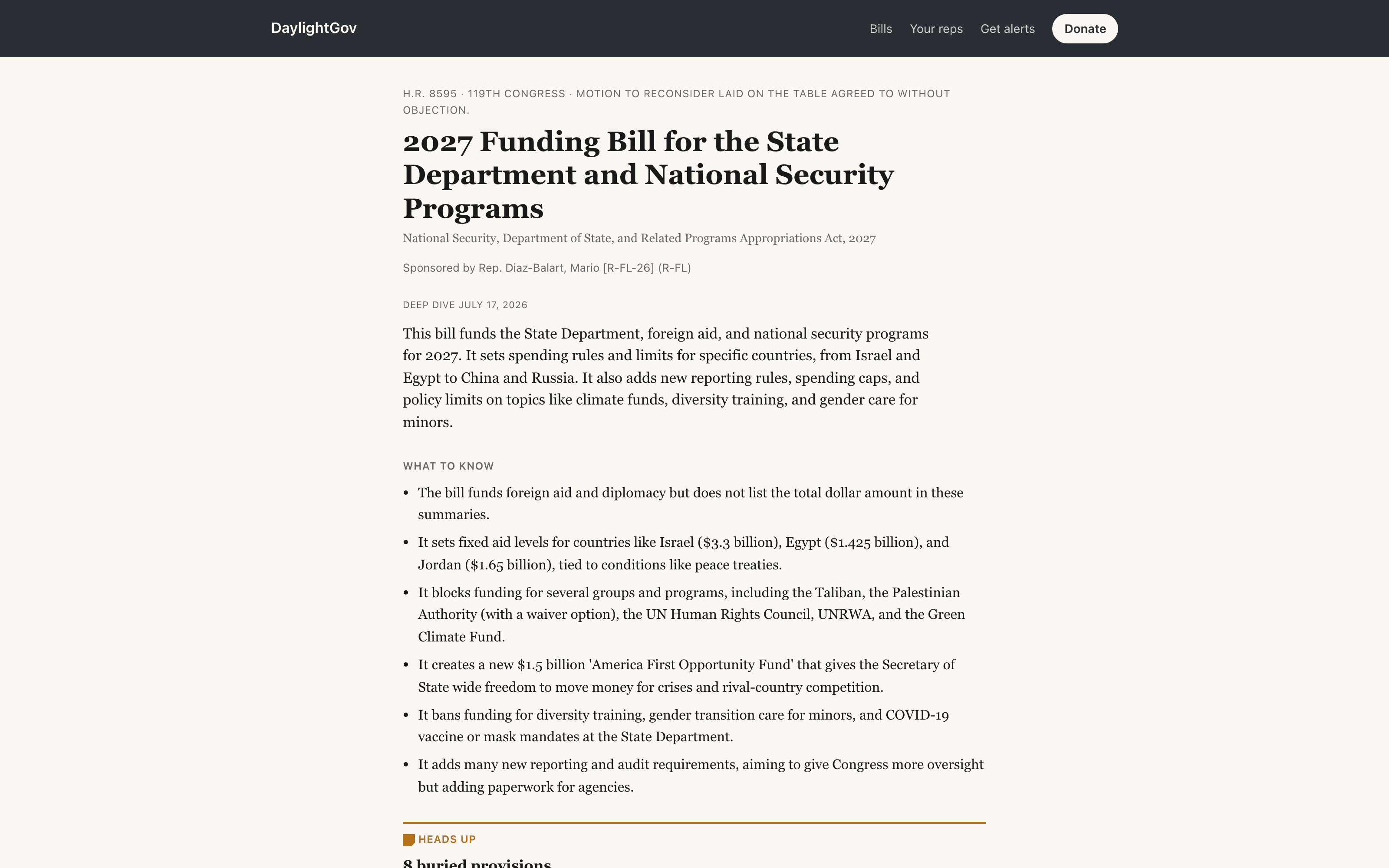
Full bills, not summaries of summaries. Plain-English deep dives with what-to-know highlights and section-by-section breakdowns, proven on the 4.6-million-character NDAA.
Buried-Provision Detection
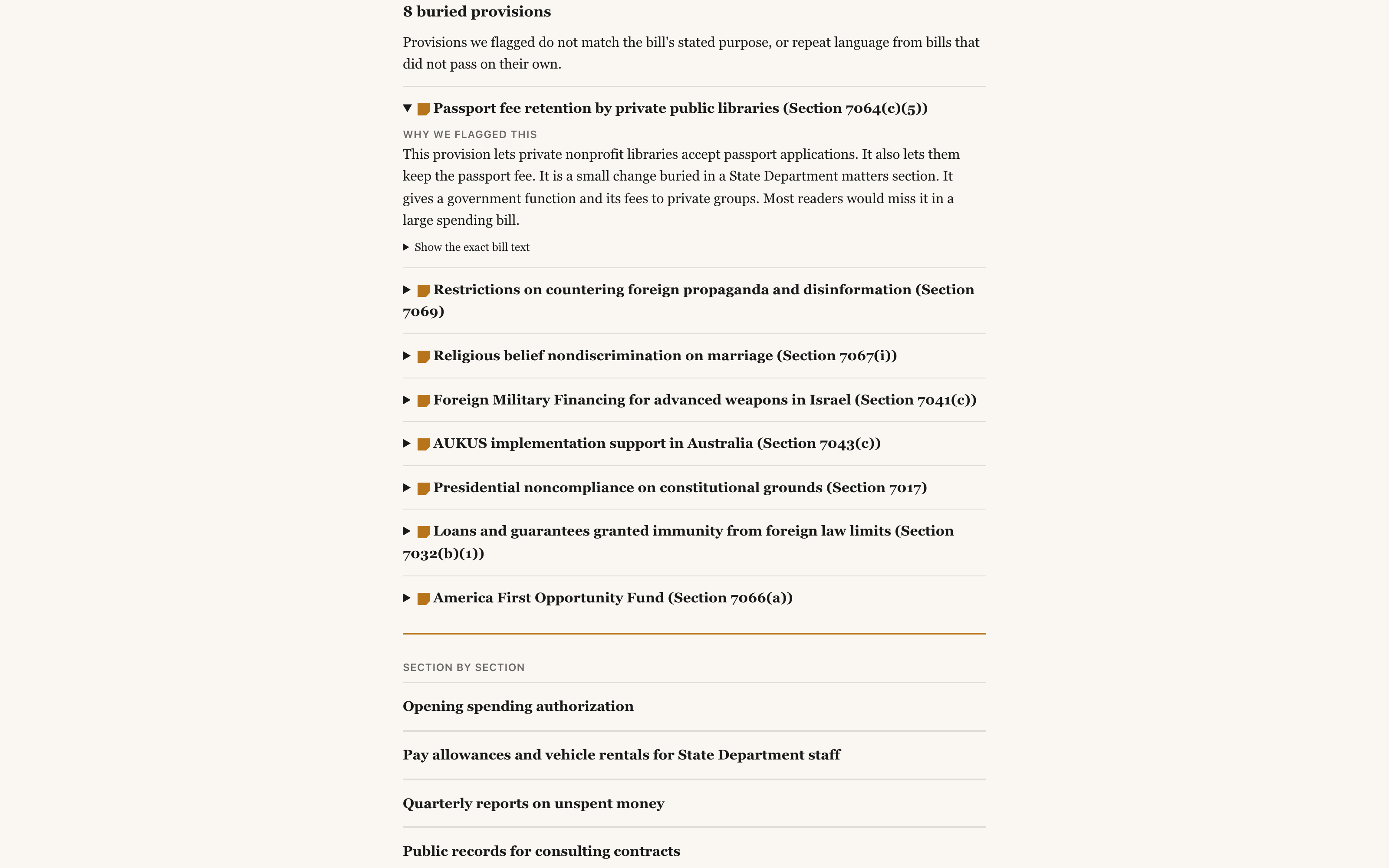
A seven-signal taxonomy flags measures that do not match a bill's stated purpose: fiscal outliers, constitutional questions, sovereignty transfer, and handoffs of power or data to private or foreign entities.
Machine-Enforced Neutrality
Every analysis must pass a readability gate, a neutral-language lexicon that blocks partisan or sensational phrasing, and strict schema validation before it can publish.
Find Your Reps
ZIP code lookup across all 536 legislators using Census district crosswalk data, with direct Congress.gov contact links.
Alerts That Lead With Substance
Bill-movement and representative-vote alerts by email, with buried-provision counts leading every subject line. $5 per month, and every analysis stays free to read.
Trust as a Feature
A public methodology page kept in sync with the detection code by automated drift tests, row-level security on all 33 database tables, and WCAG 2.2 AA accessibility.
About DaylightGov
Members of Congress know what is inside a 2,000-page bill. Most of us do not. DaylightGov closes that gap. Every analyzed bill gets a plain-English deep dive: a what-to-know summary, a section-by-section breakdown, and a list of buried provisions. Those are the measures that do not match the bill's stated purpose, repeat language from bills that failed on their own, raise constitutional questions, or hand power to private or foreign entities.
The language is party-neutral by design. No spin, no good-for-one-side framing. Just what the bill does, who it affects, and the tradeoffs. That neutrality is enforced by machines, not vibes: every analysis must pass a readability gate, a neutral-language lexicon gate, and strict schema validation before it can publish.
Under the hood, a three-tier analysis pipeline triages every incoming bill by spending, reach, and opacity, and reserves deep frontier-model passes for the bills that score highest. Combined with hard daily spend caps and per-request cost ceilings, that discipline brought projected run cost from tens of thousands of dollars per year down to roughly $5,000 to $6,000, proven on bills as large as the 4.6-million-character NDAA.
Beyond the analysis, DaylightGov includes a find-your-representatives lookup covering all 536 legislators, email alerts for bill movement and representative votes, donations, and automated distribution to five social platforms. Every analysis is free to read, forever. Revenue comes from voluntary donations and a $5 per month alerts subscription.